Activity guides · Swimming · Español
First Swim Lessons at 6 Months, 2, or 4?
“When should we start swim lessons?” is the most-asked question in every Chicago parent group — and the honest answer is that it depends on what you're buying at each age. A 6-month-old's class and a 4-year-old's class barely share a goal: one buys water comfort and survival basics, the other buys actual swimming. This guide maps each age to the right starting point — the Park District, the commercial schools, and what the pediatricians actually say — with every number dated.
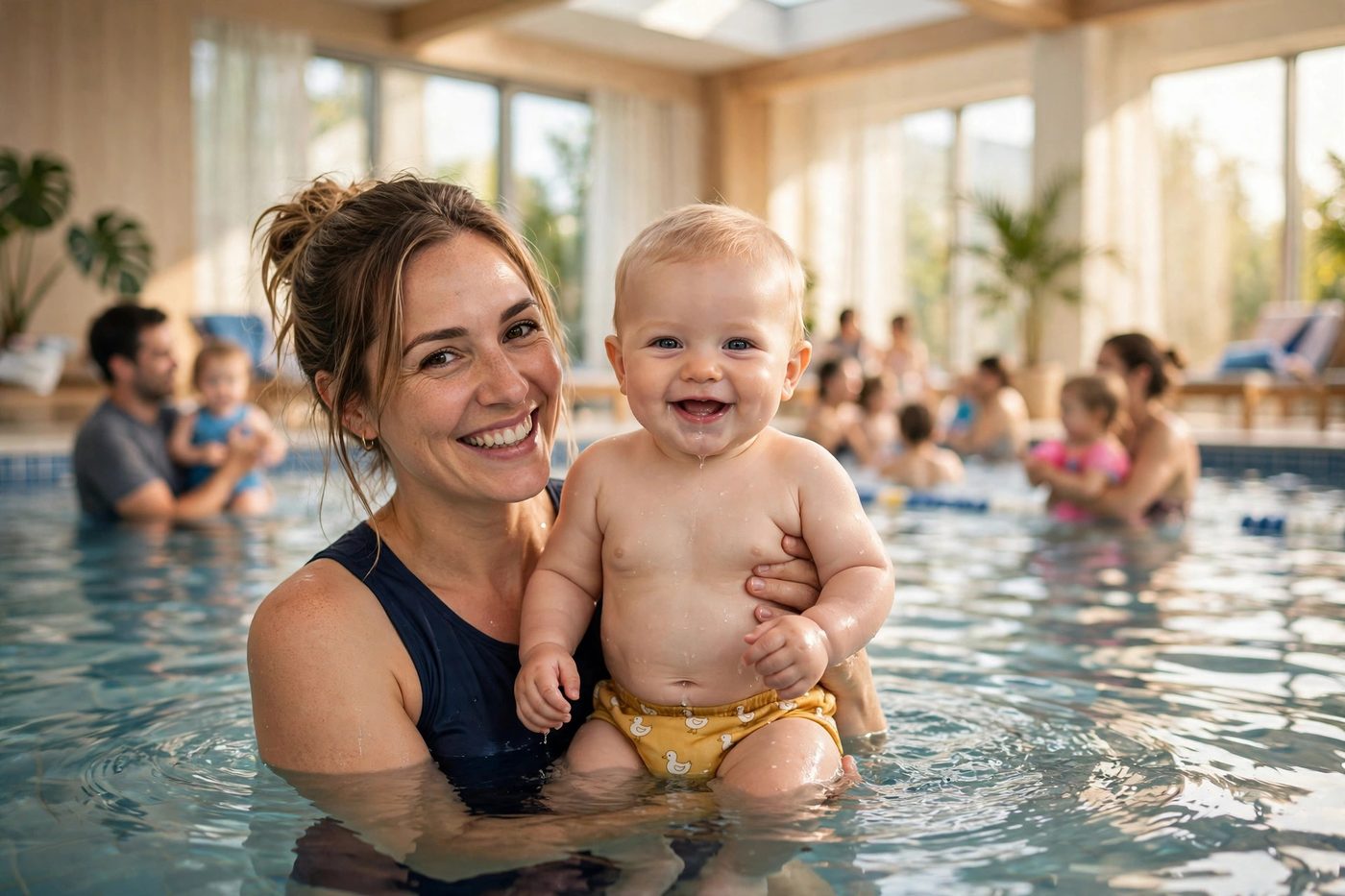
Under 1: parent-and-me water play (3–12 months)
You're in the water the whole time, and the curriculum is comfort: songs, bubbles, kicking, being held and floated, breath-holding games. The commercial schools start earliest — Big Blue from 3 months (Baby Blue, 6:1, parent in the water), Goldfish from 4 months (Mini, 4–35 months, parent-assisted), Chicago Blue Dolphins from 6 months (30-minute classes, max 5 per instructor, one adult per child in the water), and the YMCA's Swim Starters from 6 months (parent-child stages for 6 months–3 years). The Park District's Tiny Tot Swim series is the public on-ramp for this age band.
The pediatric framing matters here. The American Academy of Pediatrics says swim lessons can begin “as a layer of protection against drowning” starting at age 1 — but for babies under 1 it states there is “no evidence that infant swim programs for babies under 1 year old lower their drowning risk.” Parent-child water play classes are still fine, the AAP says, as a way to get an infant used to the pool. Parents are genuinely split on value: one calls her 6-month-old's class a joy — “not totally buying the whole it's pointless thing” — while another says of toddler classes, “it does very little, if anything, to prepare them for learning to swim properly.” The middle ground most parents land on: these classes buy water confidence and survival basics (float, roll, climb out), not strokes. (All AAP guidance from healthychildren.org, the Academy's parent site, checked Oct 23, 2026.)

Big Blue Swim School
From 3 months · parent in water
Goldfish Swim School
From 4 months · parent in water
Chicago Blue Dolphins
From 6 months · parent in water
YMCA Swim Starters
From 6 months · parent in water
Provider logos shown for identification; they belong to their respective owners.
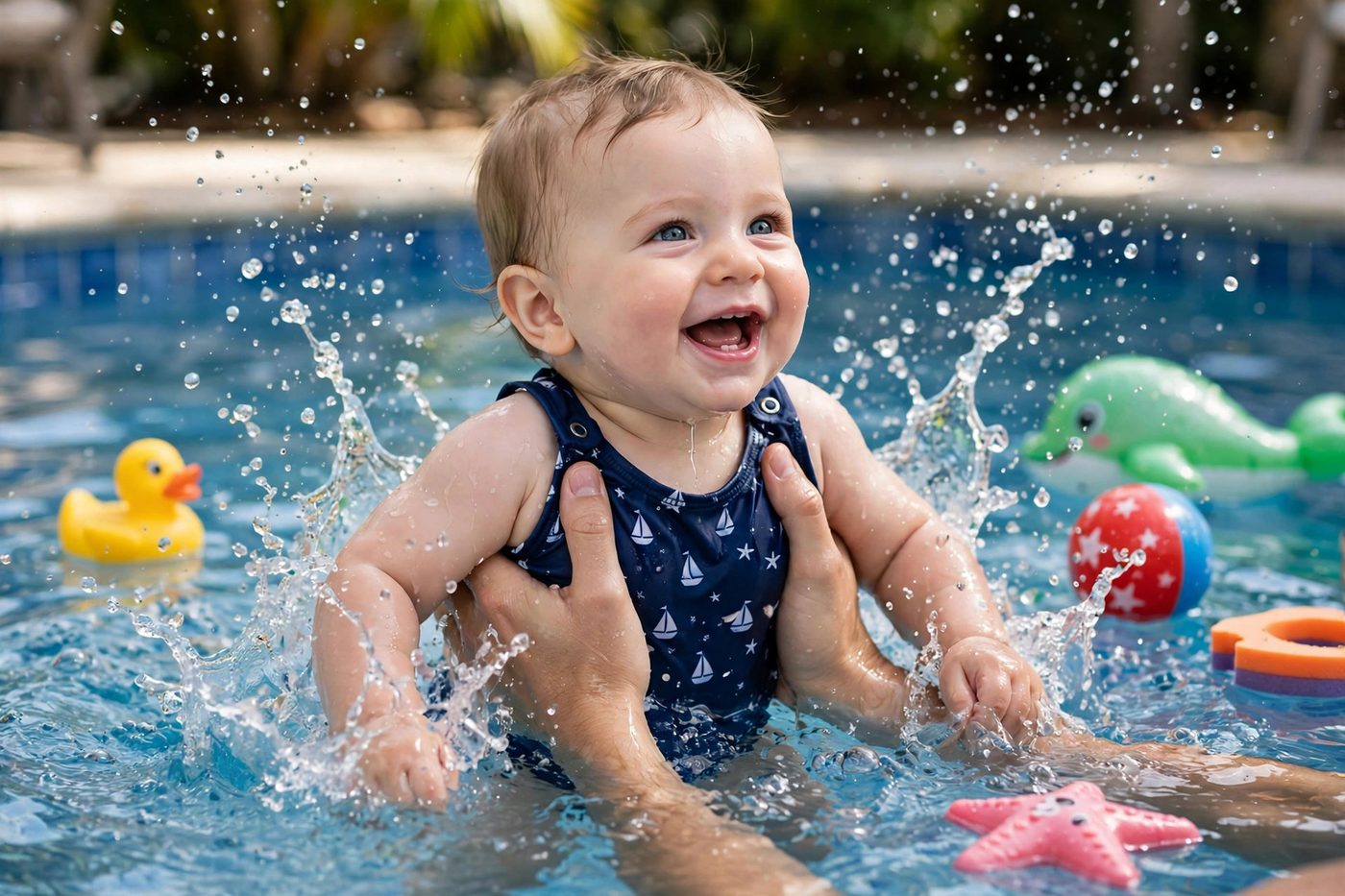
Ages 1–2: water safety starts here
This is the age the AAP's guidance points at: formal lessons as a drowning-protection layer can begin at 1, with the emphasis on water competency and survival skills — getting back to the surface, rolling to the back, floating — rather than stroke technique. Parents still join in at most programs through age 2–3.
The survival-first specialists live at this age. British Swim School's Downtown Chicago franchise runs a 3-to-36-month survival track — Tadpole (water acclimation), Swimboree (beginner water survival), and Seahorse (advanced water survival, 18–36 months) — out of hosted gym and hotel pools (checked Oct 23, 2026; the franchise site no longer publishes class ratios, so we don't quote them). For families who want the most intensive version, ISR (Infant Swimming Resource) teaches self-rescue through short, frequent one-on-one lessons; its official locator lists certified instructors in Chicago proper, including Dawn Russo in the West Loop (Fitness Formula Club, 60661), plus Forest Park, Evergreen Park, and Oak Brook. ISR booking and prices live with each independent instructor and aren't published — we don't quote them.
Practical note for this age: Chicago Blue Dolphins recommends a minimum three-month commitment for its infant-toddler program — “typically enough time for children to become comfortable, hold their breath, glide, and enter/exit safely” — and offers free trial classes for new swimmers. Its next group session begins Tuesday, November 17, 2026 (checked Oct 23, 2026).
British Swim School
Survival track · 3–36 months
ISR
Self-rescue · intensive 1:1 lessons
Chicago Blue Dolphins
3-month commitment · free trial
Provider logos shown for identification; they belong to their respective owners.
Ages 3–4: real swimming begins
Around the fourth birthday, the AAP says most children are ready for swim lessons proper — back floating, treading water, getting to an exit point. This is when programs shift from parent-assisted to independent classes, and it's when the purchase starts looking like the swimming you pictured. Goggles enter the picture at 3 and up; babies in parent-child classes don't wear them. Chicago Blue Dolphins states explicitly that private lessons begin at age 4 — its infant-toddler program is group-only by design, because, in their words, younger children “learn best in a group setting.”
The Park District's learn-to-swim classes officially start at 18 months, but the realistic on-ramp for a 3- or 4-year-old is the Early Childhood Tiny Tot series feeding into the youth levels — and the same registration-day scramble applies: competitive parks sell out in under a minute, with waitlists that parents report convert at roughly 8 in 10 for swim. If you want the full provider comparison — prices, ratios, enrollment models, makeup policies — it's here: Swim Lessons in Chicago, Compared.
Chicago Blue Dolphins
Privates from age 4 · groups under 4

Chicago Park District
Learn-to-swim from 18 months
Provider logos shown for identification; they belong to their respective owners.
What to bring to the first class
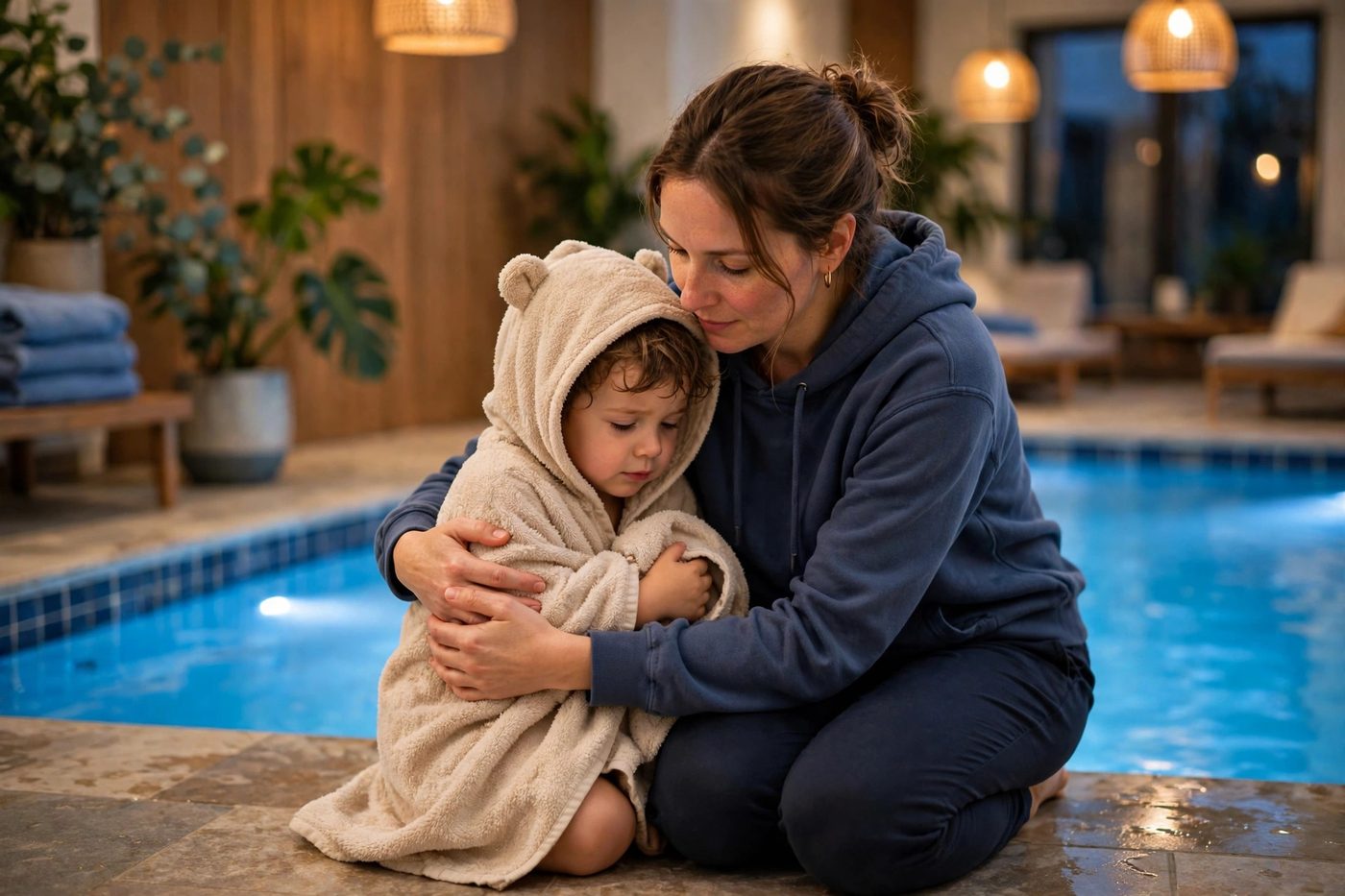
The checklist parents converge on starts with the non-negotiable: a reusable swim diaper — pools require them, and parents recommend bringing a backup (one school insists babies wear two swim layers), so a pack of disposable swim diapers as spares is the cheap insurance. Beyond that: a soft quick-dry towel or a hooded poncho (babies chill fast after about 15 minutes even in warm pools — a poncho goes on in seconds and frees your hands for the changing-room sprint), extra dry clothes for the baby and for you, non-slip water shoes for the parent on deck, a wet-dry bag for the soaked stuff, and snacks for after. Two first-class realities worth knowing: as one parent puts it, “the lesson itself went beautifully, but the meltdown happened during changing,” so pack clothes that are quick to pull on over a wet, tired toddler — and if your preschooler is graduating to independent classes, this is when anti-fog goggles and a swim cap enter the picture (babies in parent-child classes wear neither). For kids prone to ear trouble after pool time, drying drops after each lesson are the cheap prevention pediatricians mention.
When the first lesson includes tears
Some children cry through the first sessions, and swim schools are unanimous: that's normal, not failure. The pattern instructors describe is the three-lesson rule — most kids turn the corner around the third lesson with consistency, as the instructor, the routine, and the water itself stop being brand-new. What helps, according to the schools: tour the facility beforehand so the pool isn't a surprise; talk about the lesson the night before; pack the swim bag together; invent a small “see you later” ritual (a special wave, a high-five) and practice it at home; arrive early so nothing feels rushed. Share context with the instructor — previous water experience, sensory sensitivities — so they can pick the right starting point instead of guessing. And don't judge the whole enterprise by one hard lesson: some kids genuinely dislike water on their face, and that's information, not failure. (Guidance synthesized from SafeSplash, NJSwim, Sea Otter Swim, and Emler Swim School parent resources, checked Oct 2026.)
Two small purchases punch above their weight here. First, the bathtub homework: swim schools assign blowing bubbles, pour-overs, and kicking practice at home, and a set of pouring cups and squirters turns it into play rather than drills. Second, the read-aloud: Llama Llama Learns to Swim gives a beloved character the same scary milestone, and Together We Swim is about a boy facing his fear of water with his mom's support at his first lesson — read either one the week before, so the pool feels familiar before it's real. A small lovey for the bleachers doesn't hurt either.
For pool time on your own
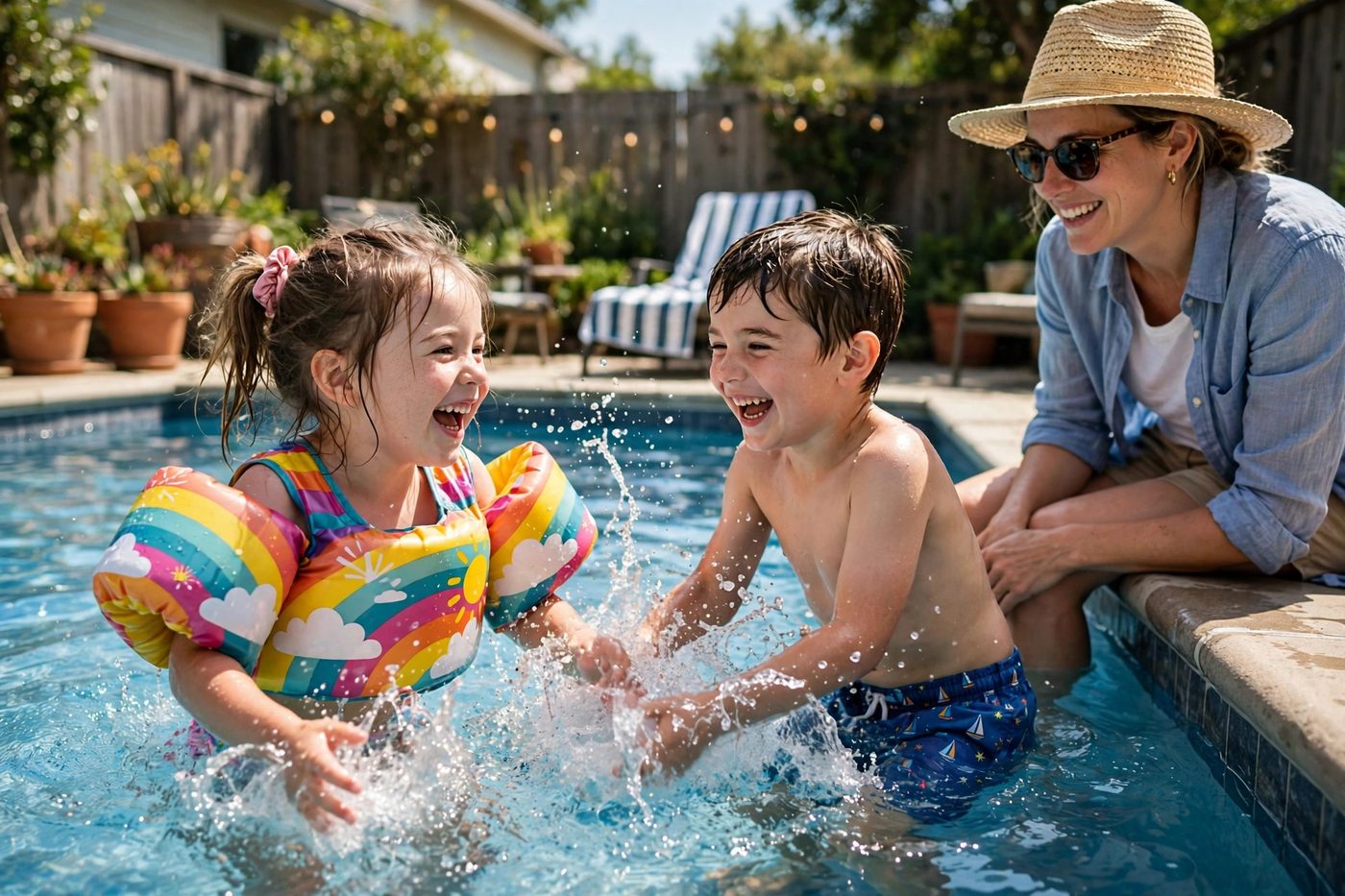
One thing to be clear about: swim instructors don't use flotation devices in lessons, and you don't need one for class. Devices like the Stearns Original Puddle Jumper hold kids in a vertical posture — the opposite of swimming position — and the AAP cautions they can create false confidence and slow real skill development. Where they earn their place is supervised pool play on your own time: the Puddle Jumper is USCG-approved, lets kids move freely, and is the vest Chicago parents name most. For babies under 30 pounds there's the infant Hydroprene version in soft neoprene instead of scratchy nylon. Separate category: boating and lake days, where most states legally require a real USCG Type II infant vest — designed to turn a baby face-up, with a grab handle and crotch strap. That's a safety device; a pool toy is not. And the line no device changes: an adult within arm's reach, always.
How to choose at each age — an honest read
This page isn't rigged toward the Park District, so here's where each side genuinely wins for first lessons:
- Pick a commercial school when your child is under 18 months and you want to start now — the Park District's official floor is 18 months, while Big Blue (3 months), Goldfish (4 months), and Chicago Blue Dolphins (6 months) all run parent-in-water baby programs. You also get rolling enrollment any week of the year, 90°F water for small babies, and real makeup policies — the things parents say the premium buys.
- Pick the Park District when price dominates and you can play registration day. Published program fees run $0–$50 with a median of $40 for the whole multi-week session (Oct 23, 2026 catalog data) — a fraction of private tuition — across 34 facilities with under-12-month sessions. Just register once and never refresh, and join the waitlist even when a class shows full.
- Pick ISR when self-rescue is the specific goal and you want the most intensive format — but know it's a separate commitment (short, frequent 1:1 lessons with an independent instructor) with per-instructor pricing.
- Pick the YMCA when you're already a member: Swim Starters (6 months–3 years) runs on the pool you already pay for, with rolling enrollment. Chicago branches don't publish lesson prices online, so call the branch.
The full packing list
Everything on this page in one place, grouped by job: what the first class requires, what gets you through the tears, what's for pool play on your own time, and the nice-to-haves. Every pick carries its honest drawback — that's the deal.
First-class essentials
- Reusable swim diapers
The single non-negotiable for any parent-tot class — Park District pools are strict about no regular diapers. Pack a backup; parents report some schools require two swim layers.
Worth knowing: Sizing has to be right or they leak — and they're one more thing in the laundry rotation. · Typically $10–$15
- Disposable swim diapers (e.g. Pampers Splashers)
The zero-commitment option — required by pools, and the backup parents say to pack regardless.
Worth knowing: Single-use cost adds up over a session; reusables win on cost by about week three. · Typically $8–$12
- Kids' swim goggles (anti-fog)
Goggles are a 3-and-up item — babies don't wear them. Once your preschooler moves into independent classes, a leak-free, anti-fog pair is cheap tantrum insurance.
Worth knowing: Anti-fog coating wears off over months of pool use, and fit varies by face shape — adjustable straps matter more than brand. · Typically $10–$20
- Kids' swim cap (silicone)
Keeps long hair out of faces and cuts post-lesson tangles — instructors notice the difference.
Worth knowing: Won't keep all water out of ears, and some kids fight the tight fit for a week. · Typically $8–$12
- Wet-dry bag
The item parents say they wish they'd bought before lesson one — wet suits and towels go in, dry bag stays dry.
Worth knowing: Cheap ones leak at the zipper; look for a double-zip or roll-top. · Typically $10–$15
- Kids' hooded towel poncho
Babies chill fast after ~15 minutes in the water; a poncho goes on in seconds and frees your hands for the changing-room sprint.
Worth knowing: Bulky to pack — a big regular towel does 80% of the job. · Typically $20–$30
When the tears come
- Llama Llama Learns to Swim (picture book)
A beloved character faces the scary milestone — read it the week before lesson one so the pool feels familiar.
Worth knowing: It's a TV tie-in 8x8 — sweet and effective, not literature. · Typically $5–$10
- Together We Swim (picture book, ages 3–5)
The most on-the-nose pick: a boy faces his fear of water with his mom's support during his first swim lesson.
Worth knowing: Ages 3–5 sweet spot — too old for babies, too young-feeling for big kids. · Typically $10–$18
- Bath toys: pouring cups & squirters
Swim schools' own homework: blowing bubbles, pour-overs, and kicking practice happen in the bathtub first.
Worth knowing: The 'practice' is really just play — which is exactly the point. · Typically $10–$15
For pool play on your own time
- Stearns Original Puddle Jumper
For the pool on your own time — not for lessons. USCG-approved for supervised play; the AAP cautions it teaches vertical posture, so treat it as a toy with a safety rating, not a teacher.
Worth knowing: Holds kids vertical, which works against real swim technique — the AAP says don't use it as a learning tool. Pool play only, never a substitute for lessons or supervision. · Typically $20–$25
- Stearns Infant Hydroprene Puddle Jumper (under 30 lbs)
The under-30-lb version of the Puddle Jumper, in soft hydroprene instead of scratchy nylon — for babies in parent-tot age.
Worth knowing: Priciest way to do what close supervision does free; same vertical-posture caveat as the original. · Typically $35–$45
- Infant life vest, USCG Type II (under 30 lbs)
The real safety device: Type II vests are designed to turn an infant face-up, with a grab handle and crotch strap. Required on boats in most states.
Worth knowing: Babies hate the bulk — that's how you know it's working. Pool-only families don't need it. · Typically $25–$35
Nice to have
- Kids' water shoes (quick-dry)
For the parent, mostly — slick decks plus a wet toddler in your arms is a fall waiting to happen. Kids like them for splash pads after.
Worth knowing: Sizing runs small across brands; size up. · Typically $15–$25
- Swimmer's ear drying drops (kids)
A few drops after each lesson dry the ear canal — the cheap prevention pediatricians mention for frequent swimmers.
Worth knowing: Prevention only; won't treat an existing infection — see a pediatrician for ear pain. · Typically $5–$10
- Kids' rash guard (UPF 50, long sleeve)
For outdoor summer lessons and beach days — sun protection that doesn't wash off mid-lesson like sunscreen does.
Worth knowing: Overkill for indoor winter lessons; skip until summer. · Typically $15–$25
Disclosure: PlanMap is a participant in the Amazon Services LLC Associates Program. As an Amazon Associate we earn from qualifying purchases made through links on this page — it never changes the price you pay or what we recommend.
FAQ — from real parent questions
What age can my child start swim lessons in Chicago?
The commercial schools start earliest, all with a parent in the water: Big Blue takes babies from 3 months, Goldfish from 4 months, Chicago Blue Dolphins and the YMCA's Swim Starters from 6 months. The Park District's learn-to-swim classes start at 18 months. The American Academy of Pediatrics says swim lessons as a drowning-protection layer can begin at age 1 — but real stroke skills develop closer to ages 3–4, and under-1 classes show no evidence of lowering drowning risk.
Will my baby actually learn anything in a swim class, or is it too early?
It depends on what you mean by “learn.” Under-2 classes teach comfort and survival basics — floating, rolling to the back, holding breath, climbing out — not strokes, and parents are split on value: some call it pointless for later swimming, others say the water confidence carried over. What baby classes reliably deliver is a child who isn't terrified of the water, which is exactly the head start the AAP's age-1 guidance is aimed at.
What happens in a parent-and-child swim class?
A parent-tot instructor describes it as “a lot of songs and games and getting the kids (and parents) comfortable in the water… Blowing bubbles, kicking legs, scooping hands, pushing off the wall and jumping in are all things you should expect to see.” First-class realities parents report: babies get cold after ~15 minutes even in warm pools, some cry through the first sessions, and one parent warns the real meltdown happens in the changing room — pack quick, easy clothes.
What is ISR (survival swim), and is it available in Chicago?
ISR (Infant Swimming Resource) is a self-rescue method: short, frequent one-on-one lessons that teach infants and toddlers to roll to their backs and float if they fall in. It's an independent-instructor network, not a school — booking, schedules, and prices live with each instructor and aren't published. ISR's official locator lists certified instructors in Chicago proper, including Dawn Russo in the West Loop (Fitness Formula Club, 60661), plus instructors in Forest Park, Evergreen Park, and Oak Brook (checked Oct 23, 2026).
What should we bring to the first swim lesson?
The non-negotiable is a swim diaper — pools require them, and parents recommend bringing a backup (one school insists babies wear two swim layers). Beyond that: a soft quick-dry towel or hooded poncho, extra dry clothes for the baby and for you, non-slip water shoes for the parent on deck, a wet-dry bag for the soaked stuff, and snacks for after class. Goggles wait until age 3 and up — babies in parent-child classes don't wear them.
What if my child cries through the first swim lessons?
Completely normal — swim schools say the first sessions are the hardest, and most kids turn the corner around the third lesson with consistency. What helps: tour the facility beforehand so the pool isn't brand-new, talk about the lesson the night before, pack the swim bag together, create a small “see you later” ritual, and arrive early so nothing feels rushed. Share context with the instructor — previous water experience, sensory sensitivities — so they can pick the right starting point. Don't judge the whole enterprise by one hard lesson; some kids genuinely dislike water on their face, and that's information, not failure.
Do we need a flotation device or life vest for swim lessons?
No — and swim instructors don't use them in lessons. Flotation devices hold kids in a vertical posture, the opposite of swimming position, and the American Academy of Pediatrics cautions they can create false confidence and slow real skill development. For supervised pool play on your own time, the USCG-approved Stearns Puddle Jumper is the standard pick; for boating, babies need a real USCG Type II infant vest with head support — never a pool toy. No device replaces an adult within arm's reach.
When can my kid take swim lessons without me in the water?
Around ages 3–4 at most Chicago schools, when programs shift from parent-assisted to independent classes and real stroke readiness begins. Chicago Blue Dolphins states explicitly that private lessons begin at age 4 — its infant-toddler program is group-only by design. The Park District's entry point is its Early Childhood “Tiny Tot Swim - Level I” series, with learn-to-swim classes officially starting at 18 months.
Part of the swimming cluster — start here, then read Swim Lessons in Chicago, Compared for the full provider side-by-side, or browse swim lessons with live Park District listings.
Data modules on this page are generated from the PlanMap catalog (Chicago Park District public data) as of October 23, 2026. Commercial program structures and prices are from provider sites, checked October 23, 2026; AAP guidance from healthychildren.org, checked the same day. Parent experiences are labeled as such and come from public parent posts (2023–2026). PlanMap is an independent project, not affiliated with the Chicago Park District or any listed provider; registration happens with each provider, and we never claim live seat availability. Product links on this page are Amazon Associates links (tag planmap-20) — we earn from qualifying purchases, which never changes what we recommend. Article illustrations are AI-generated.